

In today’s kitchens, storage is no longer just about having enough space—it’s about using that space intelligently. As kitchens evolve into multifunctional hubs for cooking, entertaining, and daily living, kitchen pantry cabinets have become one of the most valuable and versatile elements in modern kitchen design.
For homeowners in Toronto, Mississauga, Oakville, Burlington, and Hamilton, pantry cabinets are no longer a luxury feature reserved for large homes. With thoughtful design and custom cabinetry solutions, they can be seamlessly integrated into kitchens of all sizes—enhancing organization, improving workflow, and elevating the overall aesthetic of the space.
This in-depth guide explores what kitchen pantry cabinets are, the different types available, how to design them effectively, current trends, pricing considerations, and how they fit into the future of kitchen design.
What Are Kitchen Pantry Cabinets?
Kitchen pantry cabinets are tall or extended storage units designed to house food items, small appliances, cookware, and household essentials. Unlike standard base or wall cabinets, pantry cabinets focus on vertical storage, making them ideal for maximizing space without expanding the kitchen footprint.
They can be freestanding, built-in, walk-in, or integrated seamlessly with surrounding cabinetry. In custom kitchens, pantry cabinets are often designed to match the rest of the cabinetry for a cohesive, built-in appearance.
Why Kitchen Pantry Cabinets Matter More Than Ever
Modern kitchens demand more from their storage systems. Open-concept layouts, minimalistic design preferences, and growing households have changed how kitchens function.
Kitchen pantry cabinets help solve several common challenges:
- Reducing countertop clutter
- Improving accessibility and organization
- Making better use of vertical space
- Creating a cleaner, more streamlined look
When paired with smart interior fittings and thoughtful layout planning, a pantry cabinet can dramatically improve daily kitchen efficiency.
Types of Kitchen Pantry Cabinets
Not all pantry cabinets are created equal. The right choice depends on kitchen size, layout, lifestyle, and design goals.
1. Tall Pantry Cabinets
Tall pantry cabinets extend from floor to ceiling and are one of the most popular choices in custom kitchens. They offer maximum storage while maintaining a clean, architectural appearance.
They work especially well in modern kitchens where symmetry and clean lines are a priority.
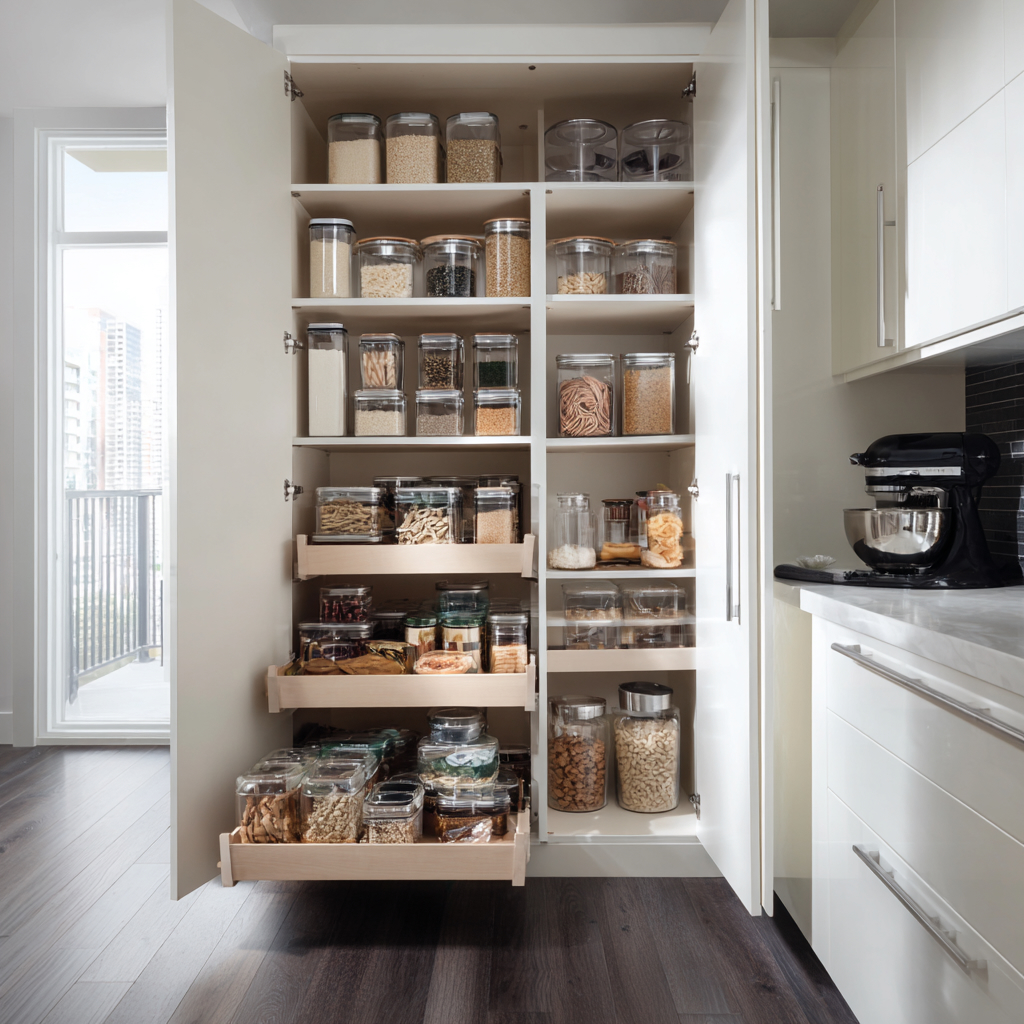
2. Pull-Out Pantry Cabinets
Pull-out pantry systems use vertical sliding mechanisms to bring all contents into view at once. These are ideal for narrow spaces or compact kitchens where a full-depth pantry might not be practical.
3. Walk-In Pantry Cabinets
More common in larger homes, walk-in pantries function as small storage rooms with shelving and cabinetry. While not technically “cabinets” alone, they often incorporate tall pantry units along the walls for structure and consistency.
4. Integrated Pantry Walls
In contemporary kitchens, pantry cabinets are sometimes concealed within full cabinet walls, blending seamlessly with surrounding cabinetry. This approach is popular in minimalist and luxury kitchens.
Custom vs. Stock Pantry Cabinets
While stock pantry cabinets may seem convenient, they often fail to fully utilize available space or align with specific storage needs.
Custom pantry cabinets allow for:
- Tailored interior configurations
- Floor-to-ceiling height optimization
- Consistent finishes and materials
- Better integration with appliances
For homeowners seeking long-term functionality and visual cohesion, custom solutions are almost always the better investment—especially in competitive real estate markets like Toronto and Oakville.
Designing Kitchen Pantry Cabinets That Actually Work
A well-designed pantry isn’t just tall—it’s smart. The interior layout matters as much as the exterior finish.
Interior Features to Consider
- Adjustable shelving for flexibility
- Soft-close drawers for dry goods
- Wire or wood pull-out baskets
- Appliance garages for small appliances
- Dedicated zones for snacks, baking, or bulk items
Pairing pantry cabinets with high-quality finishes such as mdf cabinet doors ensures durability while maintaining a refined look.
Materials and Finishes for Pantry Cabinets
Pantry cabinets should match the overall kitchen design while standing up to daily use.
Common material choices include:
- Painted MDF for smooth, modern finishes
- Veneered panels for warmth and texture
- Laminates for durability and easy maintenance
Colour trends often align with broader kitchen cabinets ideas, ranging from classic whites to deep neutrals and two-tone designs.
Pantry Cabinets and Kitchen Layouts
Pantry cabinets must be positioned strategically to support workflow and accessibility.
Popular Placement Options
- At the end of a cabinet run
- Beside built-in appliances
- Integrated near food prep zones
- As part of a full-height storage wall
In kitchens that include custom kitchen islands, pantry cabinets often balance the layout by anchoring the perimeter with vertical storage.
Kitchen Pantry Cabinets in Open-Concept Homes
Open-concept kitchens benefit significantly from pantry cabinets. They help conceal visual clutter while maintaining a clean sightline to adjacent living spaces.
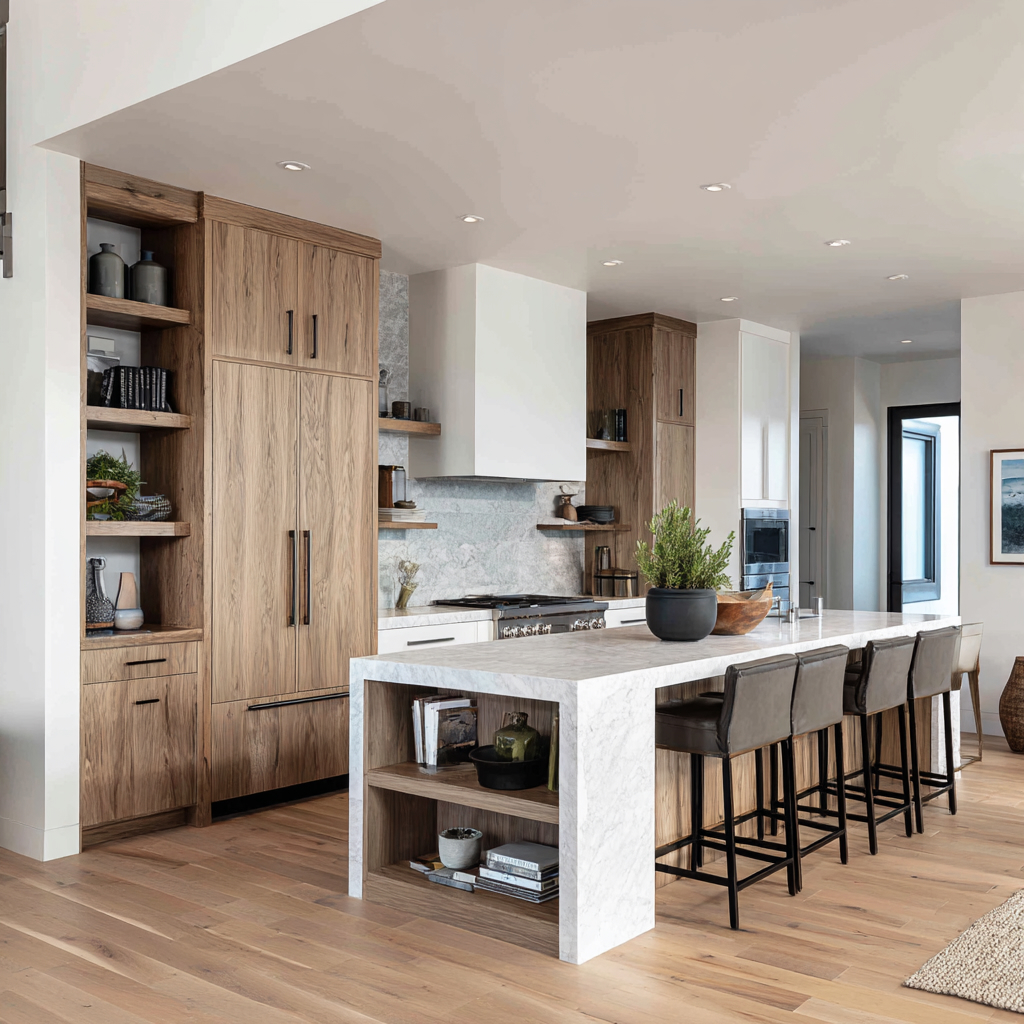
Integrated pantry cabinets can hide everything from dry goods to countertop appliances, supporting a minimalist, uncluttered aesthetic—especially when paired with designer kitchen cabinets.
Pantry Cabinets for Small Kitchens
Even compact kitchens in downtown Toronto condos or older Hamilton homes can benefit from pantry storage.
Creative solutions include:
- Narrow pull-out pantries
- Pantry cabinets built into unused corners
- Tall cabinets replacing excess upper cabinets
With thoughtful design, pantry cabinets can make small kitchens feel larger by improving organization and reducing visual noise.
Pantry Cabinets as a Value-Adding Feature
From a resale perspective, pantry cabinets are highly attractive to buyers. Organized storage is consistently ranked as one of the most desirable kitchen features.
In markets like Mississauga and Burlington, homes with custom pantry solutions often stand out due to their practicality and polished appearance—especially when installed by experienced professionals offering custom kitchen cabinets Mississauga services.
Maintenance and Longevity
Kitchen pantry cabinets are relatively low-maintenance when built with quality materials and hardware.
Best practices include:
- Cleaning spills promptly
- Avoiding overloading shelves
- Using soft-close hardware to reduce wear
- Periodically adjusting shelving for changing needs
With proper care, custom pantry cabinets can last decades without needing replacement.
Kitchen Pantry Cabinet Trends to Watch
As kitchen design continues to evolve, pantry cabinets are adapting to new lifestyles.
Current and emerging trends include:
- Hidden pantry doors that blend into cabinetry
- Integrated lighting inside pantry units
- Mixed materials for visual interest
- Dedicated beverage or coffee pantries
- Pantry cabinets replacing excess upper cabinets
These trends reflect a broader shift toward kitchens that feel more like living spaces than utility rooms.
Frequently Asked Questions
What can I use instead of a pantry cabinet?
Alternatives include open shelving, wall-mounted storage systems, freestanding cabinets, or a walk-in pantry room. However, pantry cabinets remain the most space-efficient and visually cohesive option for most kitchens.
What is a good price for a pantry cabinet?
A basic stock pantry cabinet may start around a few hundred dollars, while custom pantry cabinets typically range higher depending on size, materials, and interior features. Custom solutions offer better long-term value due to superior fit and durability.
What is replacing the kitchen island in 2026?
Design trends suggest a shift toward multifunctional furniture, modular worktables, and extended perimeter cabinetry. That said, islands are not disappearing—they’re simply evolving to include more storage and flexibility.
What is the 60 30 10 rule for kitchens?
The 60-30-10 rule is a colour guideline: 60% dominant colour (usually cabinetry), 30% secondary colour, and 10% accent colour. Pantry cabinets often play a role in the dominant or secondary colour palette.
Final Thoughts
Kitchen pantry cabinets are no longer optional add-ons—they are essential components of a functional, modern kitchen. Whether you’re renovating a compact condo in Toronto or designing a custom home in Oakville, pantry cabinets offer unmatched storage, organization, and visual appeal.
When designed and installed professionally, they enhance everyday living while adding lasting value to your home. By choosing custom solutions tailored to your space, you ensure that your kitchen not only looks beautiful—but works beautifully too.